The Power to Grow:
Keeping New York Land in Agriculture
Harvesting the Sun. Preserving the Soil. Protecting Family Farms.
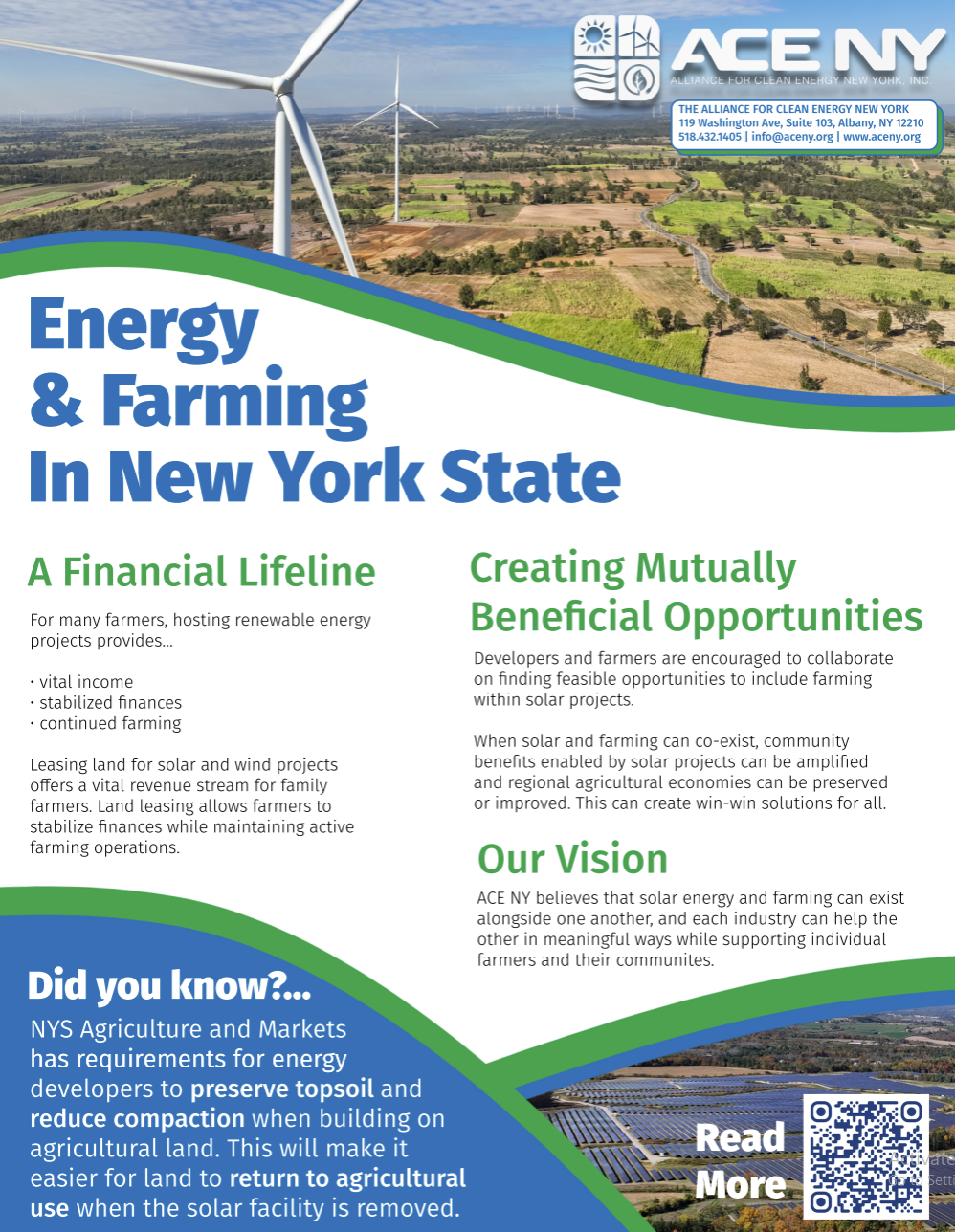
Across New York State, generational farm families are facing unprecedented financial pressures. The Power to Grow documents how farmers, grazers, and researchers are using New York’s energy transition to diversify farm income, improve soil health, and ensure working farmland stays in production for generations to come.
Learn More
Frequently Asked Questions
-
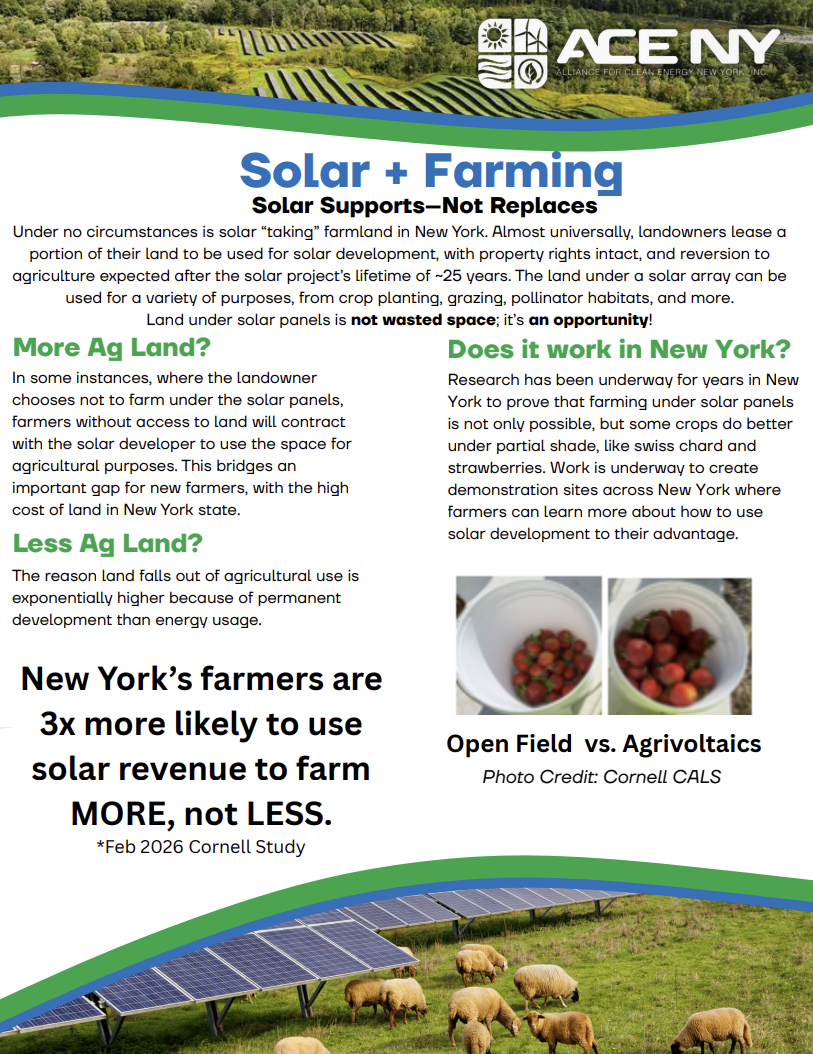
No. Solar installations are temporary, non-permanent land uses—typically operating under 20- to 30-year lease agreements. Unlike commercial or residential sprawl (such as subdivisions or strip malls), solar development involves minimal ground disruption and concrete footprint. At the end of a project’s lifecycle, equipment is decommissioned, and the land can return directly to active crop production. In fact, resting soil under solar arrays for two to three decades allows topsoil to regenerate and recover from intensive chemical and tillage practices.
-
Agricultural economics in New York are increasingly volatile due to fluctuating commodity prices, rising input costs, and extreme weather events. Guaranteed, long-term lease payments from solar energy provide farmers with a stable, predictable baseline income. This steady revenue helps farm families absorb market downturns, invest in farm equipment, pay property taxes, and transition land smoothly to the next generation—keeping the broader farm business operational and intact.
-
Yes. This practice—often referred to as dual-use solar or solar grazing—is expanding rapidly across New York State. Sheep and poultry graze routinely under and between solar panels, eliminating the need for gas-powered lawnmowers and weed trimmers while providing livestock with shade and high-quality forage. Additionally, ongoing research is demonstrating success with cattle grazing, hay production, and shade-tolerant crop cultivation.
-
When solar sites are planted with native grasses, deep-rooted pollinator species, and clover mixes, they significantly improve soil health over time. Perennial vegetation reduces wind and water erosion, improves water filtration, builds organic matter, and sequesters carbon in the soil. Furthermore, establishing pollinator-friendly habitat under solar arrays directly benefits nearby crops that depend on bees and native pollinators for yield production.
-
New York State and local municipal regulations require solar developers to submit detailed decommissioning plans and post financial security before construction begins. This ensures that funds are set aside to remove all equipment, underground conduits, and racking posts, restoring the land back to its original agricultural state without any cost to the landowner or town even if a project is sold or a developer goes out of business.
-
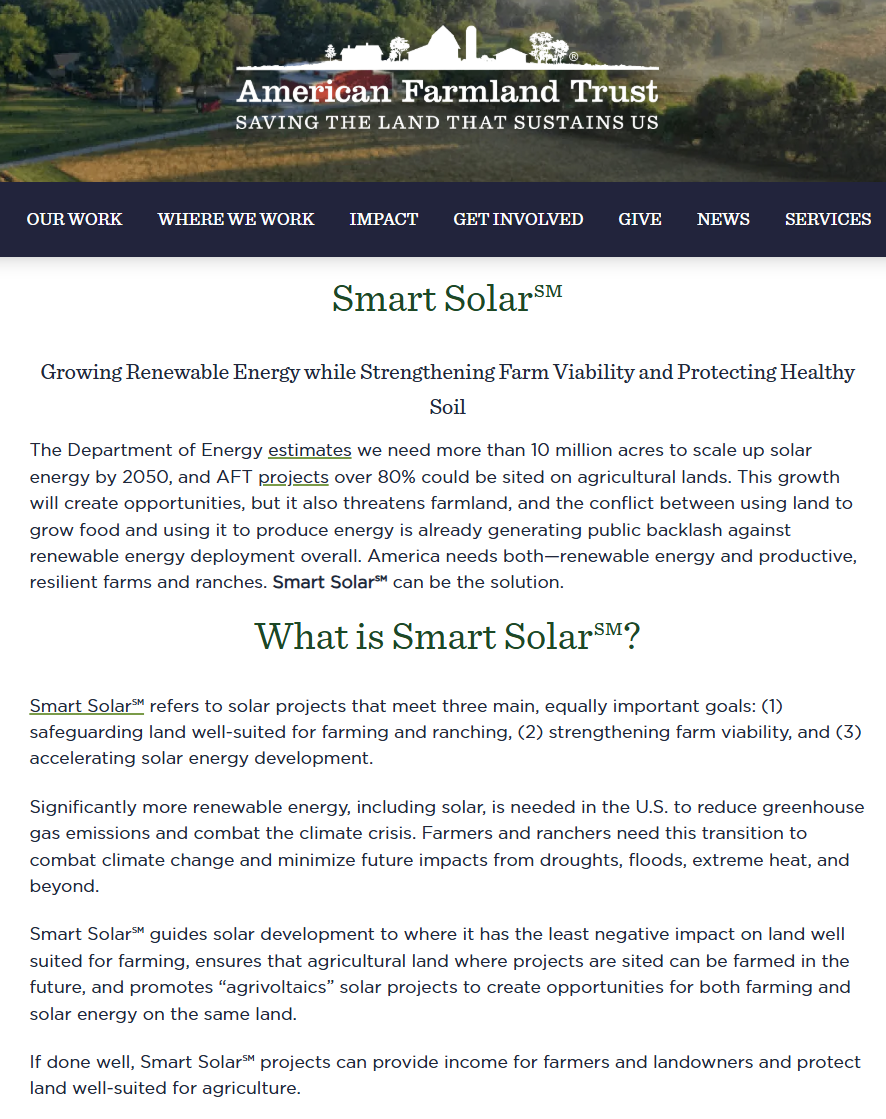
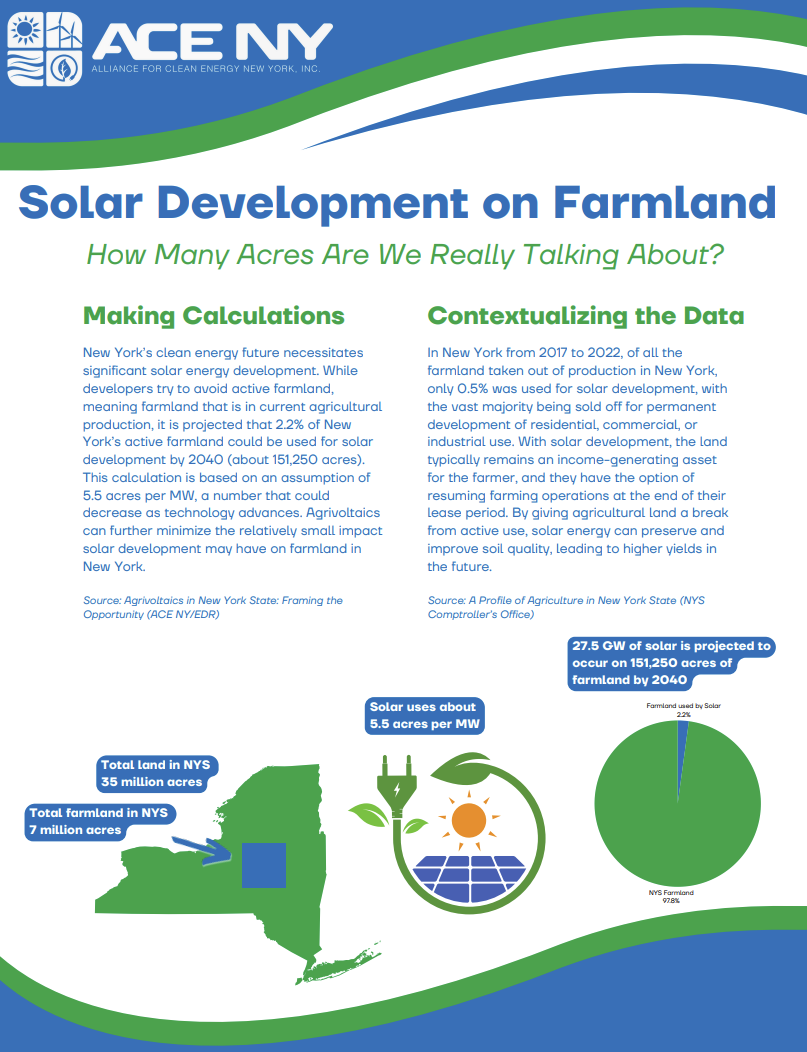
Even under New York State’s ambitious clean energy goals, total solar development is projected to utilize about 3% of the state’s total agricultural land footprint over the coming decades. By comparison, thousands of acres of agricultural land are permanently lost every year to paved residential and commercial development. Dual-use solar provides an alternative that preserves open space and protects land from permanent suburban expansion.
This project was made possible by