
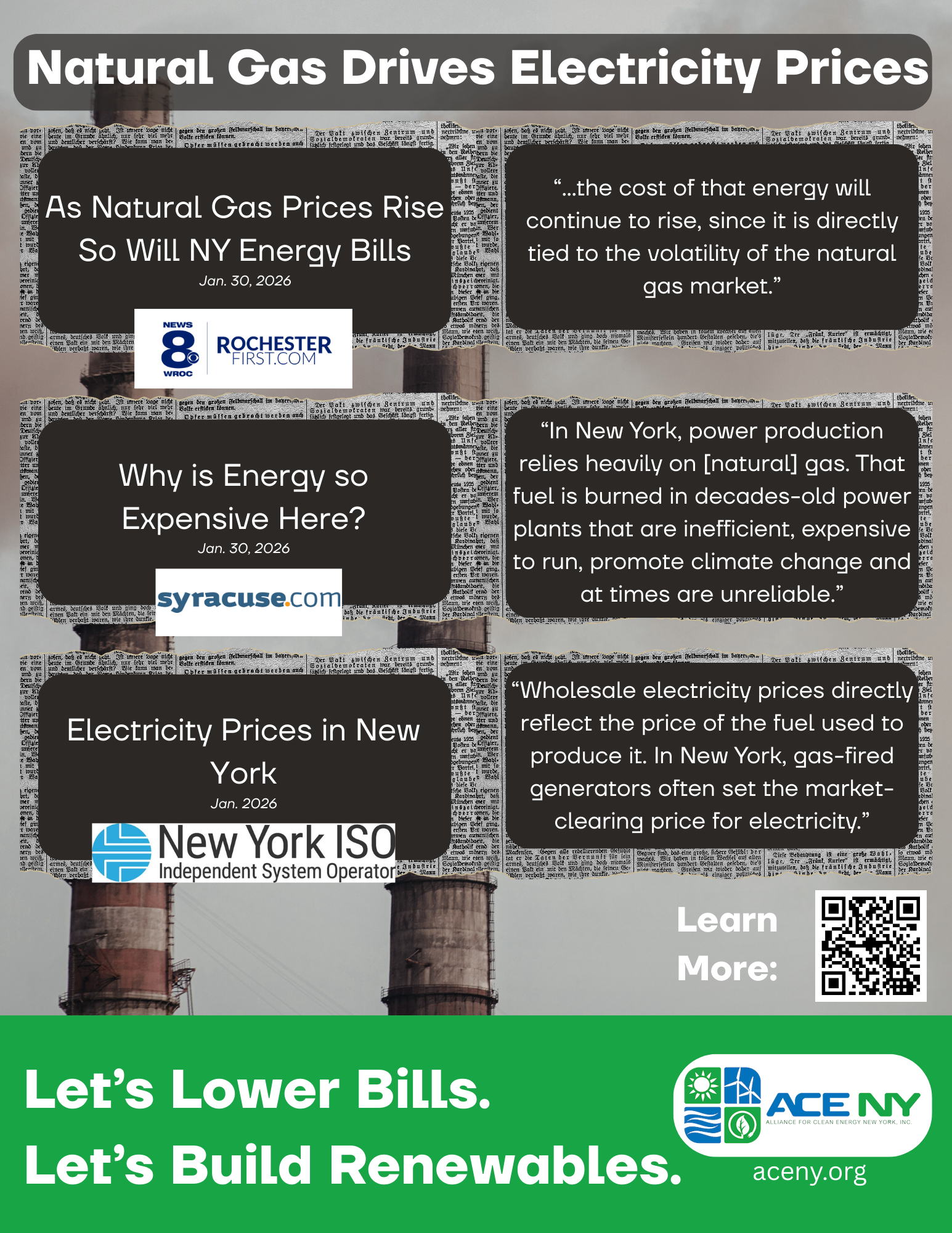
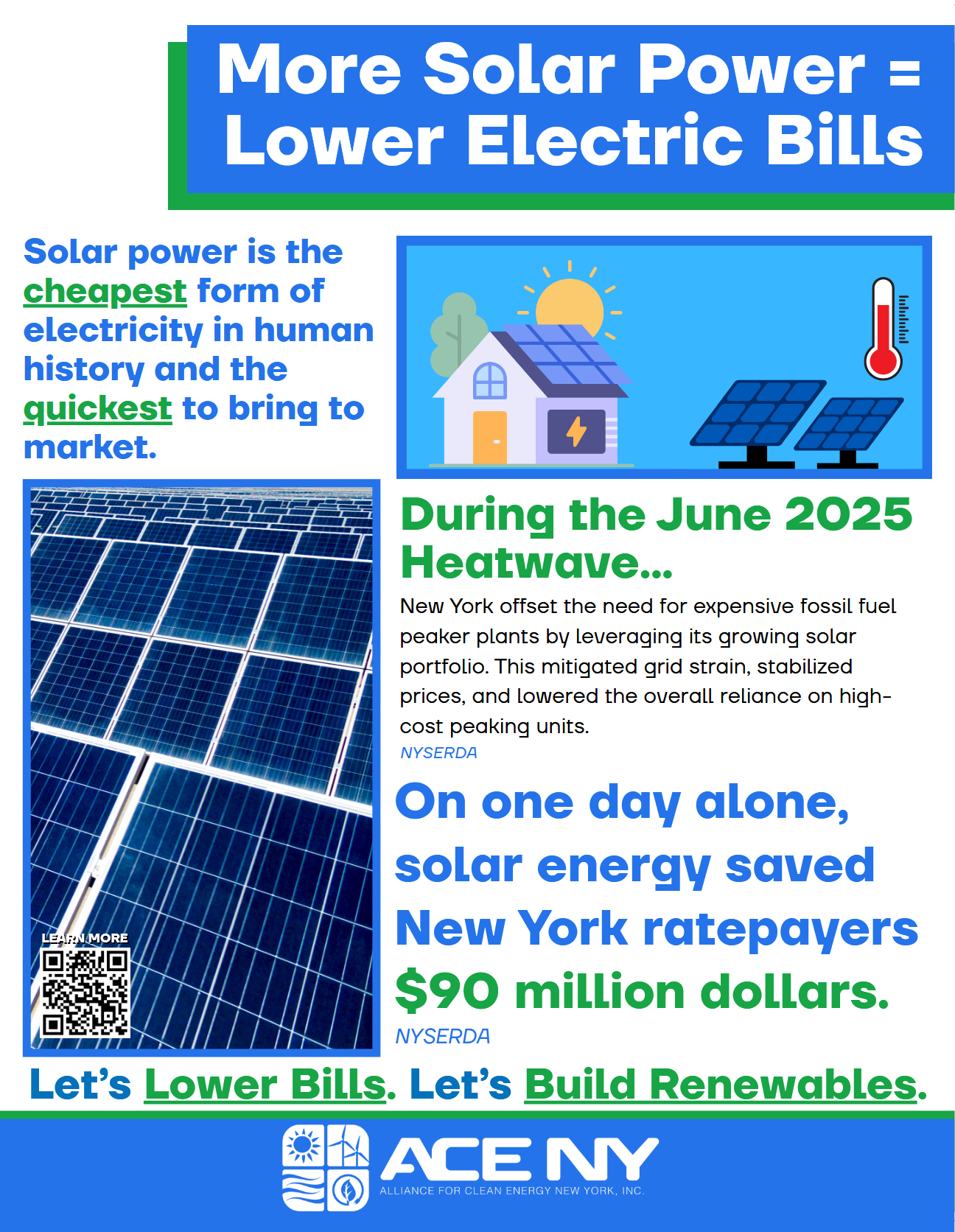
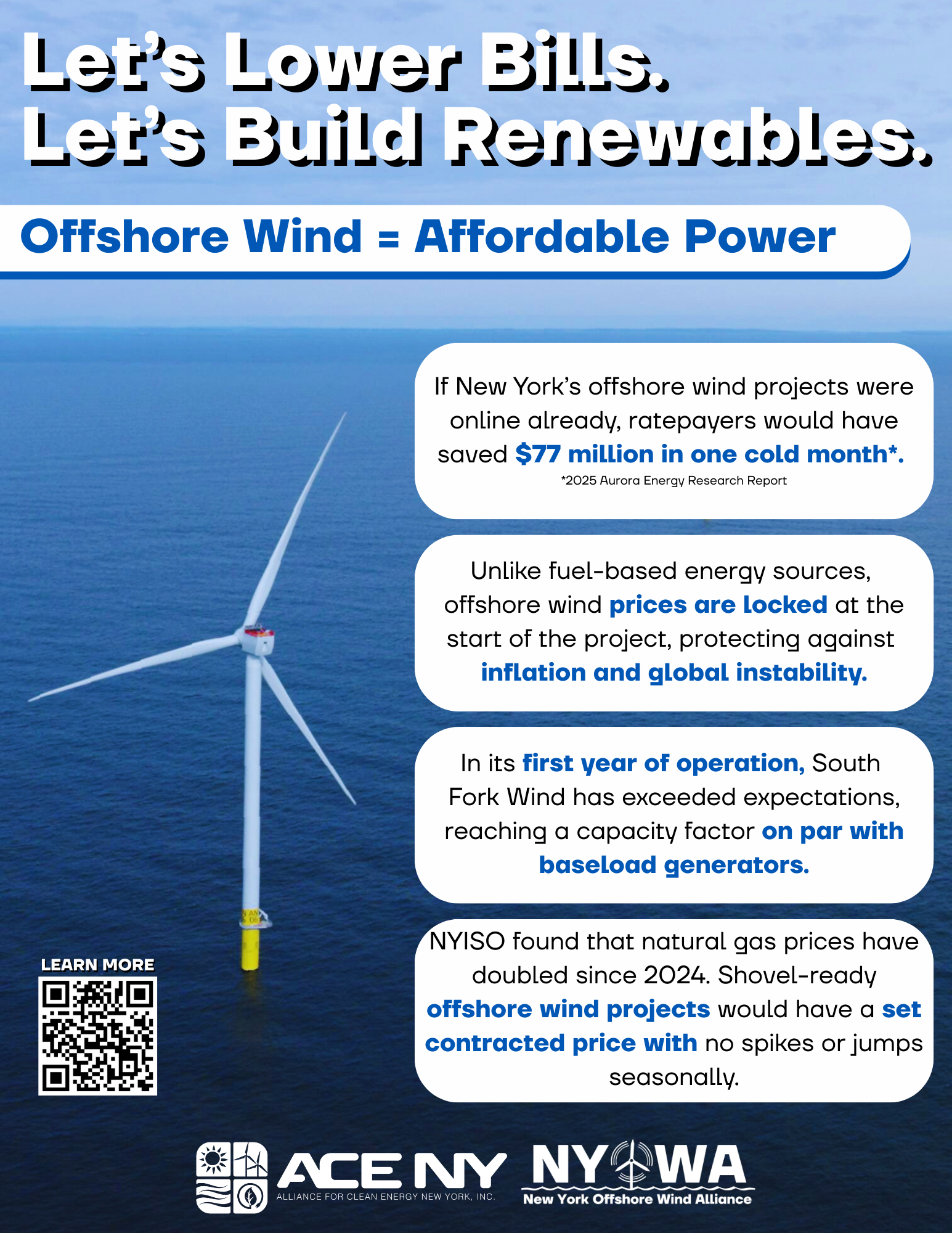
The data is clear: Renewable energy isn't just a climate solution—it is the most powerful tool we have to protect New York ratepayers from volatile fossil fuel prices.
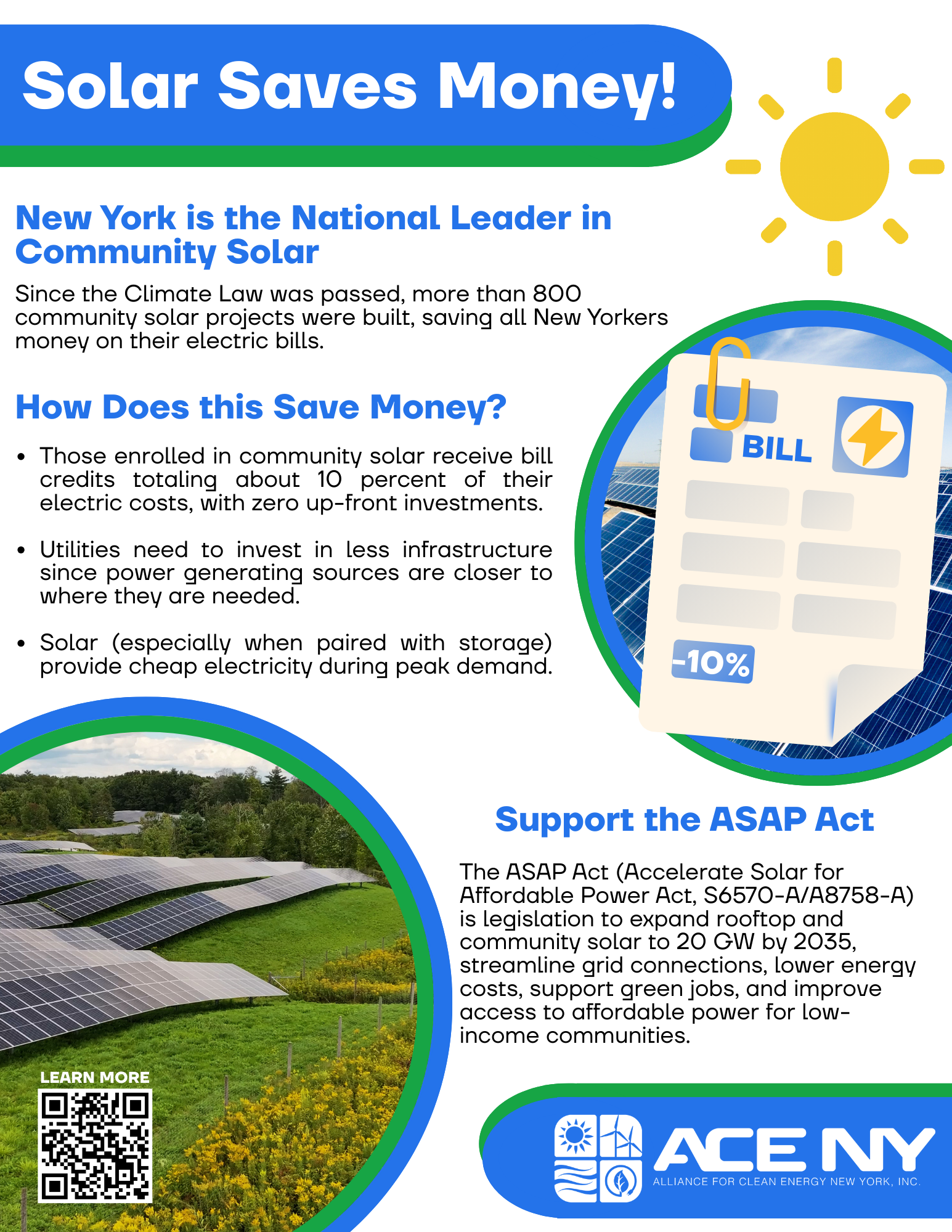
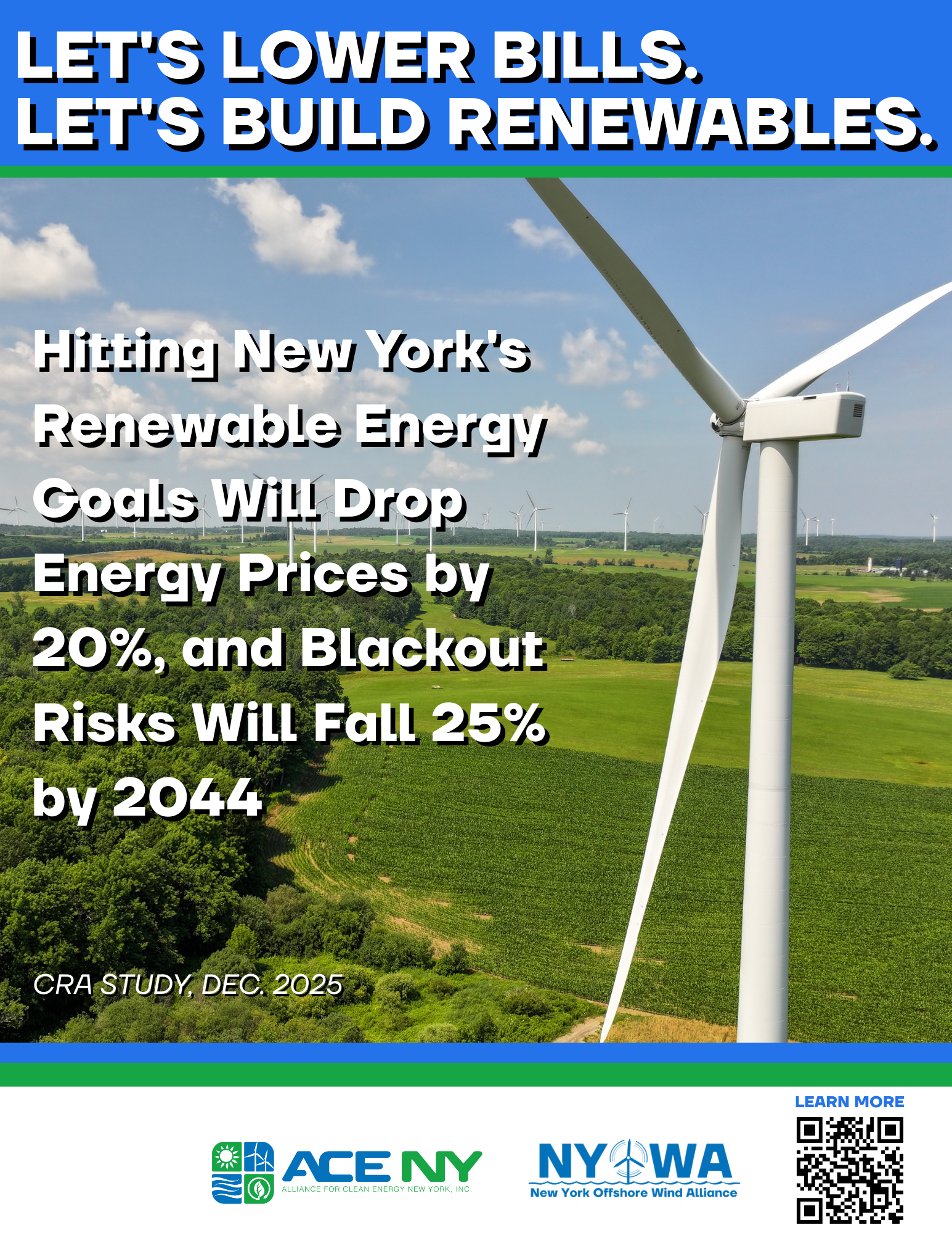
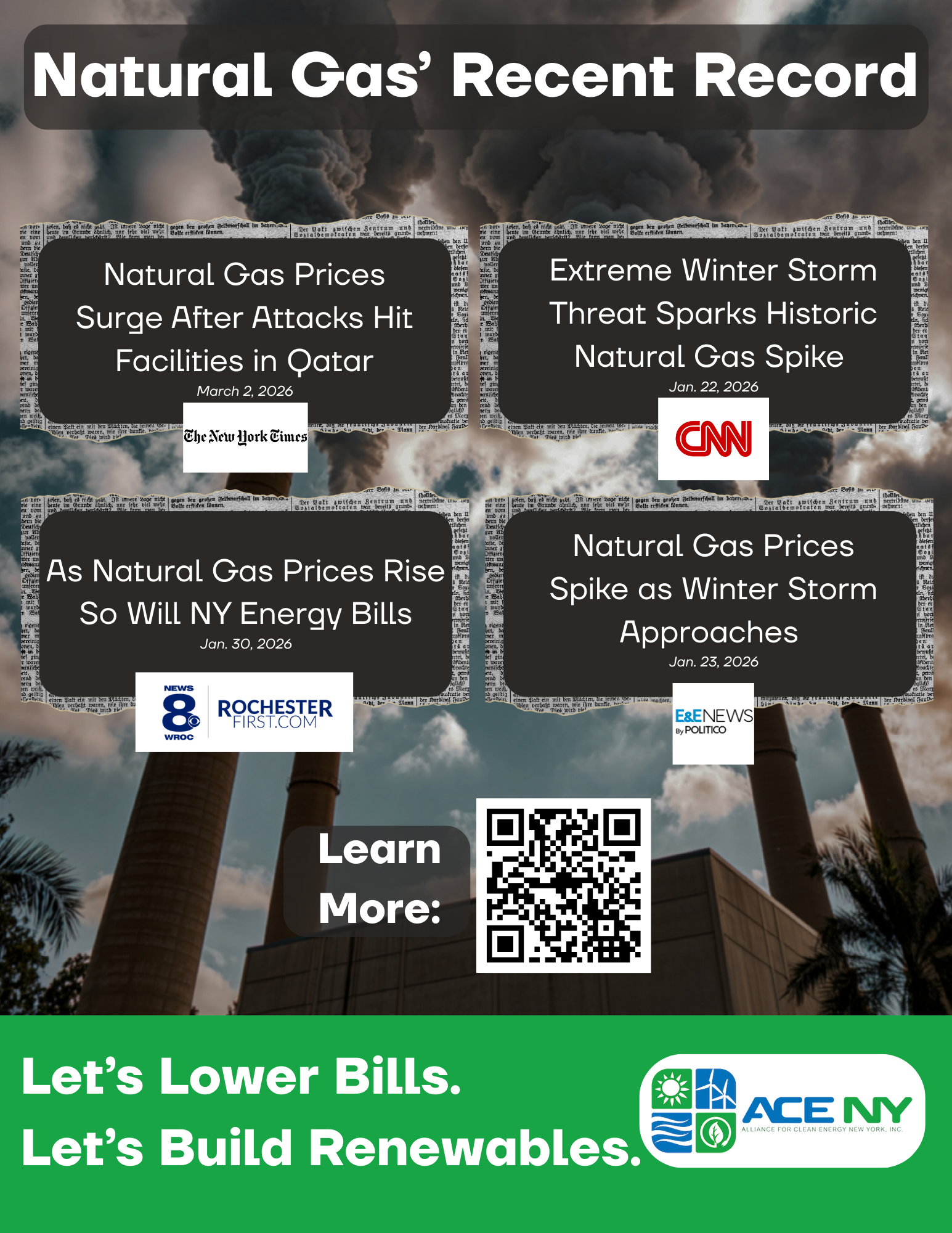
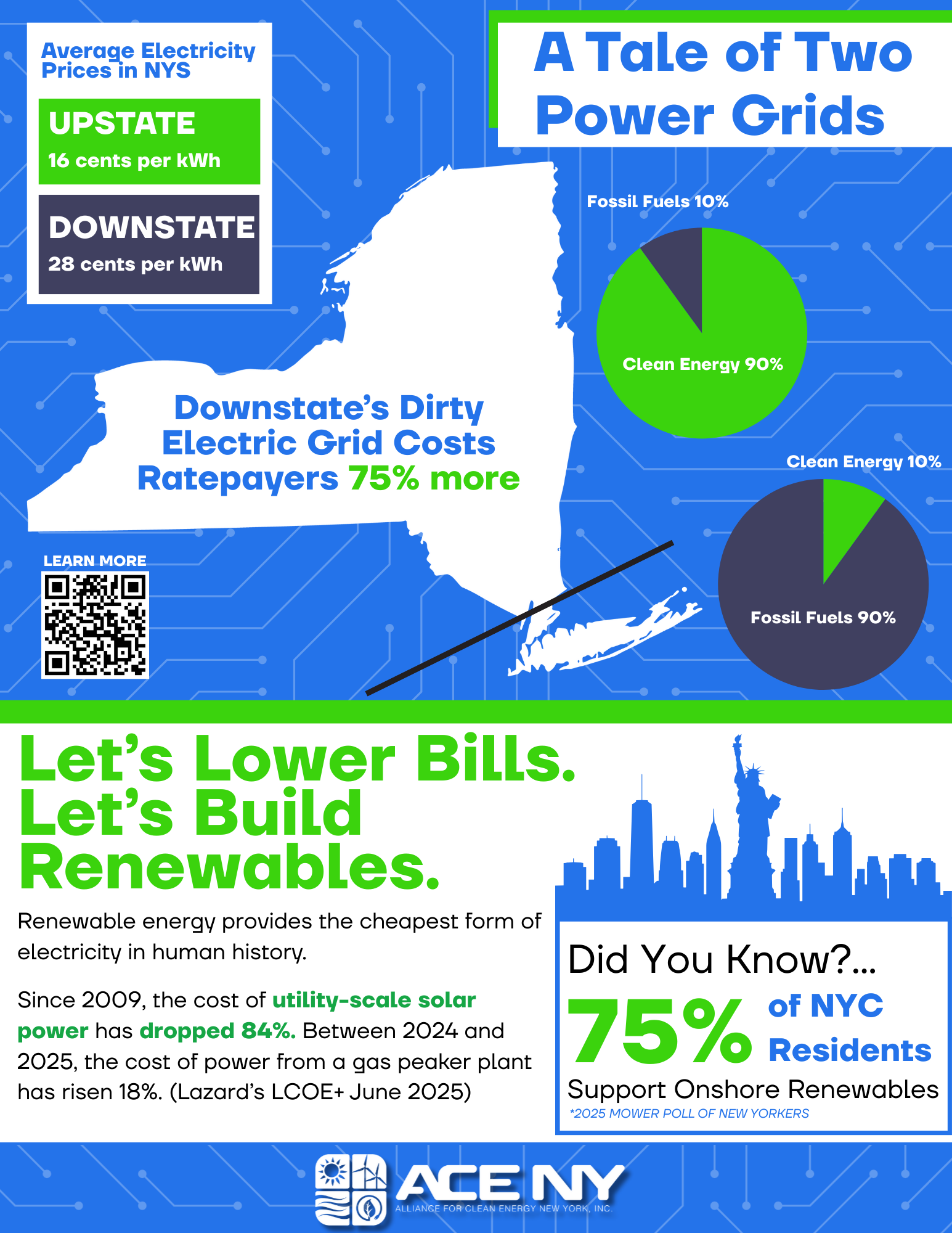
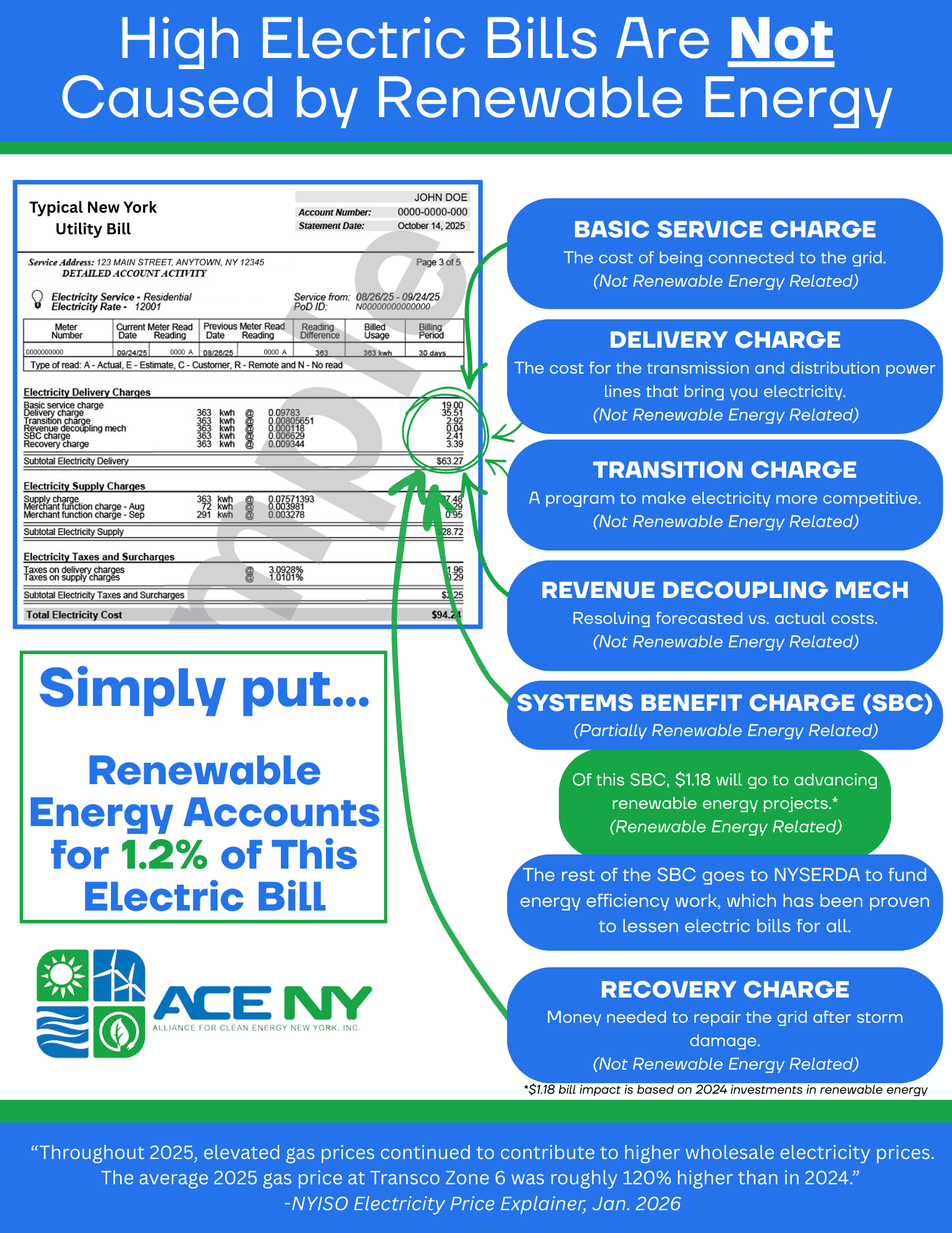
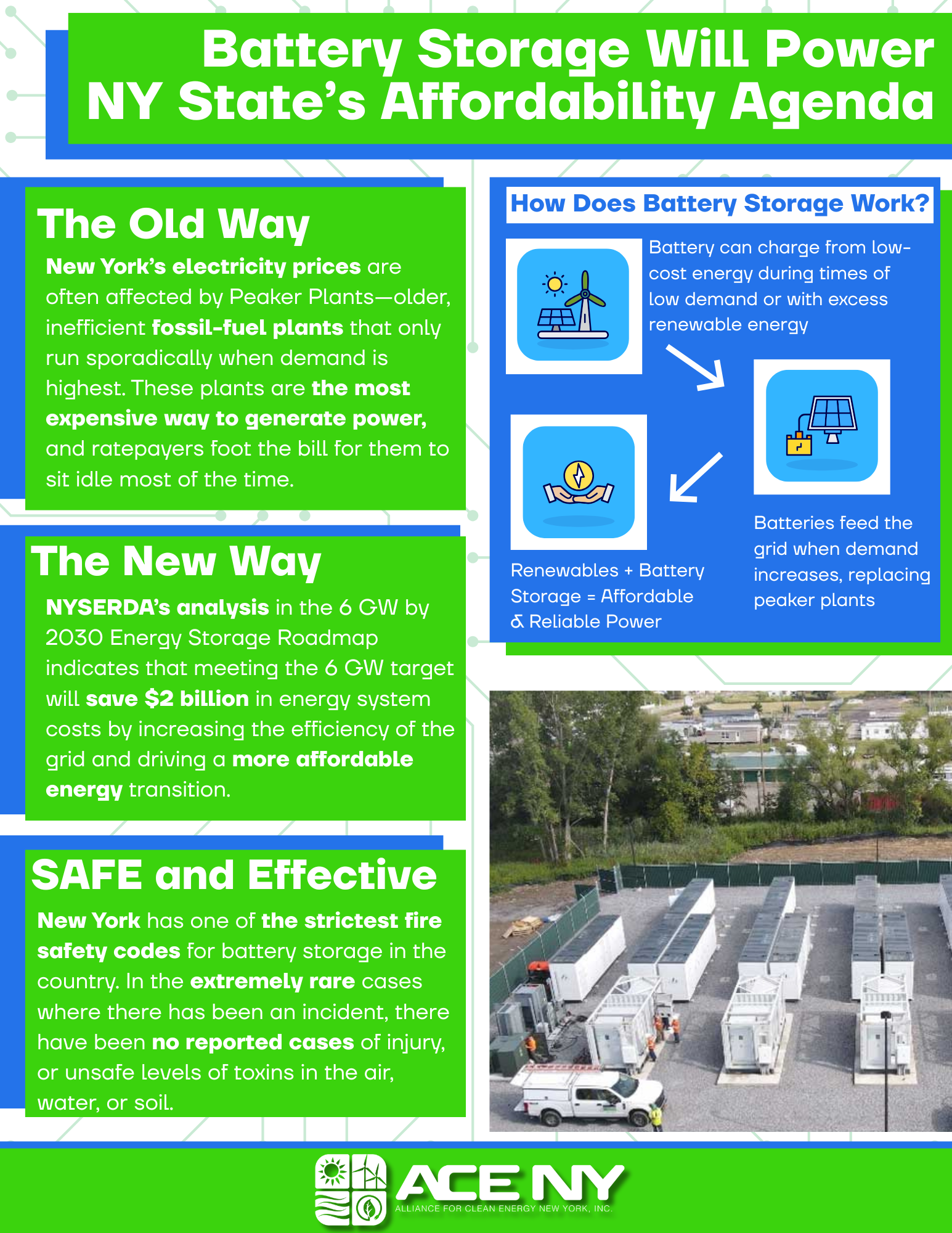
View and download these affordability flyers
Get The Data! Learn More In These Independent Reports
-
Yes. According to the latest Lazard Levelized Cost of Energy (LCOE) reports, utility-scale solar and onshore wind are the cheapest forms of new electricity generation in history. Building new renewables is now often cheaper than simply continuing to run existing, aging fossil fuel plants.
-
We need reliability, not necessarily gas. Modern Battery Energy Storage Systems (BESS) can now capture excess renewable energy and discharge it precisely when demand peaks. In fact, replacing expensive peaker plants with storage is projected to save New Yorkers $2 billion in system costs by 2030. Batteries act like a "strategic reserve" that prevents the massive price spikes caused by fossil fuel volatility.
-
High delivery charges are largely a result of maintaining an aging, centralized grid designed for the 20th century. By building Distributed Energy Resources (DERs)—like community solar—near where people actually live, we reduce the need for billion-dollar "long-haul" transmission upgrades. Renewables allow for a more efficient, decentralized grid that lowers the "hidden costs" of moving power.
-
While the initial capital investment for offshore wind is significant, it provides a massive, consistent source of power directly to New York City and Long Island—the areas with the highest electricity prices. By generating power locally in New York waters, we stop "exporting" billions of dollars to global gas markets and start creating stable, predictable energy prices for decades.
-
New York has the strictest fire safety codes in the nation for energy storage. Recent data shows that in the extremely rare event of a battery incident, there have been no reported cases of toxins affecting local air, water, or soil quality. Storage is the safe neighbor that provides stability that our grid needs to lower bills.
Clean Energy in the News